
PE Lesson Plans Ideas for Reception
Physical Education plays a vital role in the Early Years Foundation Stage, supporting children’s physical, social, and emotional development from an early age. Through purposeful movement and play, Reception pupils develop fundamental skills such as balance, coordination, and spatial awareness, which underpin lifelong physical activity. PE also contributes to confidence, resilience, communication, and positive attitudes toward learning.
Fun Reception PE Lesson Ideas
Reception PE lessons are most effective when they feel like play rather than exercise. Young learners benefit from short, varied activities that develop skills such as jumping, running, balancing, and throwing. Inclusive and adaptable activities ensure every child can participate and succeed. Flexible reception PE resources allow teachers to modify equipment, space, or rules to meet a wide range of abilities. See our blog for more guidance on adapting PE lessons.
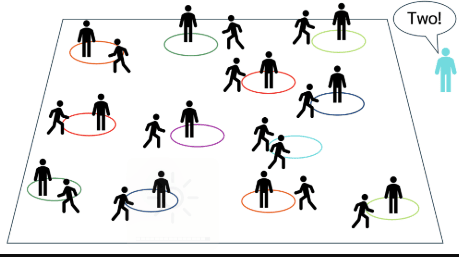
Number Islands
Set up:
· Place hoops or mats around the space to act as ‘islands’ for the children to move between
How to Play:
- Children move freely around the area using different ways of travelling, such as jogging, sidestepping, or bunny hopping.
- Keep them moving for 5–8 minutes to help raise their heart rate.
- Ask them: Can you feel your heart beating? Can you count how many beats in 20 seconds?
Teacher Instruction:
- While moving call out a number (e.g. 3). Children must quickly group themselves into that number and stand together on one of the mats or spots.
- Start with smaller numbers (e.g. 2 or 3) and increase as the children become more confident.
- Any child who doesn’t find a group performs that number of star jumps (e.g. if the group was 3, they do 3 star jumps).
Extension: Once in their group, ask children to hold a simple balance together—such as a tuck, a one-foot balance, etc.

Click here for a free lesson for reception including this game.
Creative Reception PE Games
Creative Reception PE games combine imagination and movement to keep children engaged while developing key physical and social skills. Imaginative role-play, such as pretending to be pirates, superheroes, or jungle explorers, encourages creativity, cooperation, and confidence. Simple equipment such as hoops, beanbags, cones, and balls adds variety and supports the development of fine and gross motor skills through rolling, throwing, balancing, and movement activities. Music and rhythm further enhance PE sessions by creating an energetic, enjoyable learning environment that supports children in improving listening skills, timing, and body control.
Boarding the Train
Prepare: Trains usually have passengers on board who are travelling from one place to another. Can we create a long class train with all the children as passengers?
Teacher: You are the driver of the train. Get the children to sit in spaces around the room. As you pass them, tap each child on the shoulder, which is their cue to stand up and board the train.
Children: To board the train, each child needs to hand over a ‘ticket’ to you, then they join on behind. Continue collecting passengers until everyone is onboard in a long 'follow my leader' line. (This could then also be reversed, so that each child leaves the train too).
Extension: Now, try the same idea with the children in pairs.
- One child is the train driver – they will find their partner and collect them.
- The other child is the passenger. They need to be in a space, waiting for their partner to collect them.
- Once the train arrives, the passenger hands over their ticket and then follows the driver’s route. They can use fast or slow speeds and even make a tunnel for their partner to go through.
- When the train stops, it is time for their passenger to disembark - Swap over roles.
Exciting Reception PE Challenges
Rather than focusing on competition, Reception PE should encourage personal achievement by helping children improve their own performance. This will help to build confidence, resilience, and self-esteem without pressure. Gradually increasing the difficulty of activities supports skill progression, with structured reception PE lessons that introduce skills step by step, enabling children to experience success and a strong sense of accomplishment as they develop.
Assault Course
Set up:
- For a class of 30, aim to set up at least 5 separate courses (more if space and resources allow).
- Children work in small groups, one group per course.
- As soon as the first child in a group has passed a clear point (e.g. halfway through), the next child can start.
- This helps keep the activity moving, with fewer children sitting and waiting.
How to Play
- Line up a group of children behind each assault course station.
- Children take turns to go one at a time through their course.
- When they finish, they return to the back of their group’s line.
- Once everyone in the group has had a turn, rotate the groups to a new station.
- The activities stay the same, but they will be in a different order at each station.
Extension
- Turn it into a friendly race. The first team with all players finished and sitting quietly behind their cone wins.

Click here for a free lesson for reception including this game.
For help with the tuck roll, use our free tuck-roll resource card to give the children a visual aid.
Collaborative PE Learning for Younger Pupils
Collaborative Reception PE activities help children develop social skills by encouraging communication, cooperation, and turn-taking through partner and small group games. Activities such as rolling a ball to a partner, mirroring movements, passing, chasing, or working together toward a shared goal promote teamwork, problem-solving, and confidence in a supportive environment. Using high-quality reception PE resources ensures these collaborative activities are structured, age-appropriate and meet the needs of the early learning goals, helping every child feel included and successful.
Newspaper Carry
With a sheet of newspaper and a beanbag. The objective is to hold the newspaper between themselves and balance the bean bag on top. Children should then move out, round the cone before them, and back to the start position. Emphasise how easy it could be to rip the paper, so they must be careful and communicate with each other.
Extension: Repeat using a small soft ball. Try two balls. Try a larger ball (not too heavy). Make it competitive.

Check out our family zone for more fun activities and games suitable for the whole family!
Explore More Reception PE Support
For ready-to-use activities, progression-based planning, and engaging ideas, explore our full range of reception PE lesson plans and reception PE resources designed specifically for early years pupils. Check out our blog for more help with planning in PE.