

Teaching Dance to Primary School Children - Updated for 2026
Dance in PE is more than just moving to music; it’s a powerful way for pupils to develop creativity, confidence, and physical literacy. Within the National Curriculum for Physical Education, dance plays a unique role in helping children express themselves while meeting key curriculum outcomes.
But what is the importance of dance in physical education, and why should it be central to your PE lessons?
Why is Dance Important in PE?
Dance provides opportunities that other activities in PE cannot always offer. When teaching dance as part of the National Curriculum, pupils may be taught to:
- Develop creativity – Express emotions, themes, and stories through movement to music.
- Build collaboration – Work in pairs and groups to devise, refine, and perform dance routines.
- Improve fitness and control – Develop flexibility, coordination, balance, and rhythm.
According to the Department for Education, dance is a key component of the PE curriculum, helping pupils “develop competence to excel in a broad range of physical activities” and engage in physically active lifestyles.
Benefits of Teaching Dance in PE
1. Creativity and Expression
Dance allows pupils to explore narratives, music, and themes both physically and imaginatively. From natural events to sporting moments or historical topics, almost anything can be transformed into a dance sequence.
Research from the Arts Council England highlights how dance supports creative thinking and cultural engagement in young people.
2. Meeting the National Curriculum
Dance in PE supports many of the aims of the primary PE National Curriculum, including developing fundamental movement skills such as balance, agility, and coordination. Linking dance with classroom topics is also a great way to encourage cross-curricular learning.
3. Collaboration and Teamwork
While often seen as an individual activity, dance is highly collaborative. Children share ideas, practise movements together, and perform as a group, developing communication and teamwork skills that transfer beyond PE lessons.
4. Physical and Social Development
Dance not only develops fundamental movement skills but also supports wellbeing and self-confidence. Giving children the opportunity to express themselves through movement helps them connect with both themselves and others.
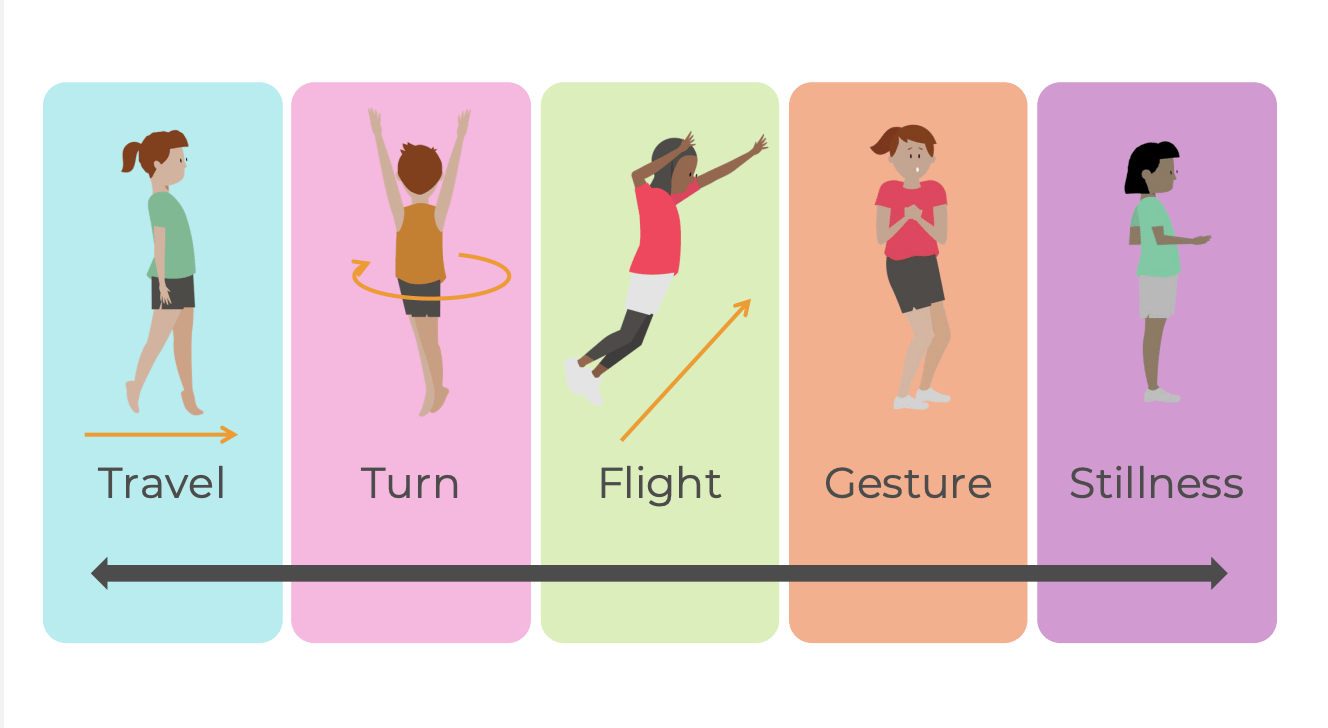
Dance Ideas for PE
Here are some simple and engaging ways to incorporate dance into your PE lessons:
1. Happy Circle
Equipment: Soft/Relaxing music
How to Play:
- Have all the children sit in a circle with the teacher sitting in with them. Play some relaxing and engaging music. Could you like to any of our music?
- Explain that the children will be performing different actions.
- Butterflies: Children pretend to be butterflies. The soles of their feet should be touching while they gently bounce their knees up and down to emulate the flapping of wings - where would you like to fly today?
- Rocking boat: Rock from side to side, they are the captains of their ship - where would they like to sail today?
- Mermaids and Mermen: Mermaids and mermen have tails, ask the children to bring their legs together, straight in front of them and point their toes, this is their tail! Hold on the pirates are coming! The children should bring their knees towards them and pretend to hide. When the danger has passed, they can stretch their legs out again.
Rotate through each action at least twice, asking different children where they would like to go.
2. Meet in the Middle
Equipment: Soft/Relaxing music
How to Play:
- Split the class in half on opposite sides of the room.
- They must skip to meet in the middle and then follow the teacher's instructions, such as touching their left foot with their right hand or sitting on their bottom.
- They must follow the instructions and then swap over to the other side of the room.
- They should wait in line until everyone is back, and then the teacher sends them to the middle again with a different action.

Click here for more examples of actions pairs could use.
3. Follow the Leader
Equipment: Soft/Relaxing music
How to Play:
- Split the children into 2/4 groups depending on the class size.
- While the music is playing, the children take turns being the ‘leader’. They perform actions that the rest of the group has to follow.
- After a few phrases, the teacher will shout ‘next’ to move the leader along the line, and the next child will then become the leader.
- Start by putting the children in a circle so they can see each other. Then, ask the group to form a line and start travelling around the room with the leader at the front. When the leader changes, the children will go to the back of the line, and the new leader will be at the front; this helps to encourage different movements.
Bring Dance into Your PE Curriculum
Dance is a powerful tool for engaging all pupils in physical activity while supporting creativity, confidence, and collaboration. By embedding dance into your PE lessons, you’re not only meeting curriculum goals; you’re also helping children discover the joy of movement.
For free, ready-to-use dance lesson plans, explore additional resources and start bringing dance to life in your school today.
Alternatively, check out our Dance Activity Page for more guidance and ideas on teaching Dance in your school.