Ace Your Wimbledon PE Lesson: Fun Tennis-Inspired Games
Tennis is a fantastic way to inspire excitement, movement, and skill development in primary PE lessons. You don’t need a tennis court or professional equipment to get pupils involved - just a few racquets, soft balls, and plenty of enthusiasm.
Here are five fun and easy Wimbledon PE games to help you serve up a memorable Wimbledon-themed PE lesson that your class will love.
1. Battleships
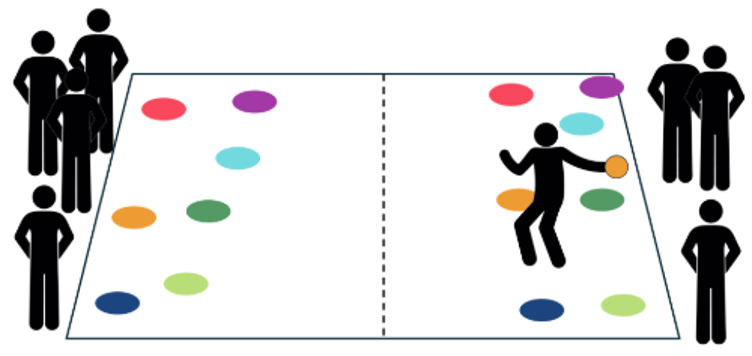
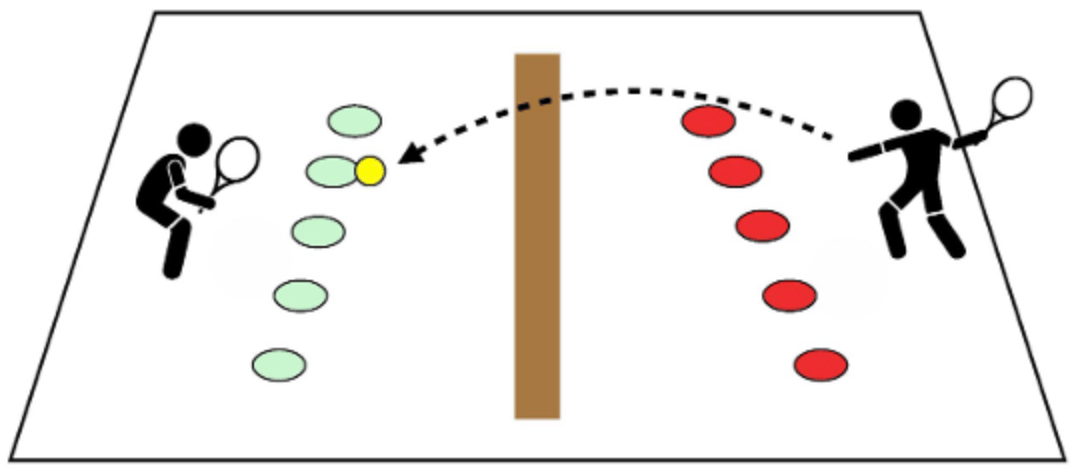
This game is played 4 v 4 and set up as per the diagram. You can adjust the size of the playing area based on the children's abilities.
Equipment: Rackets, soft balls, cones, makeshift nets
Rules:
- Players take turns hitting the ball over the net, trying to hit and knock down the opposing team's cones.
- If a cone is knocked down, it is considered "eliminated" and is removed from play.
- The game continues until one team has eliminated all the opposing team's cones.
- Players are not allowed to touch the net, and the ball must clear the net for a valid play.
- If the ball lands outside the playing area, it counts as a foul, and the opposing team gets an additional turn.
Scoring:
- One point is awarded for each cone knocked down.
- The team with the most points wins.
Extensions:
- Adjust the distance from the net to the cones depending on ability.
- Increase or decrease the number of cones to challenge the teams.
2. Target Tennis
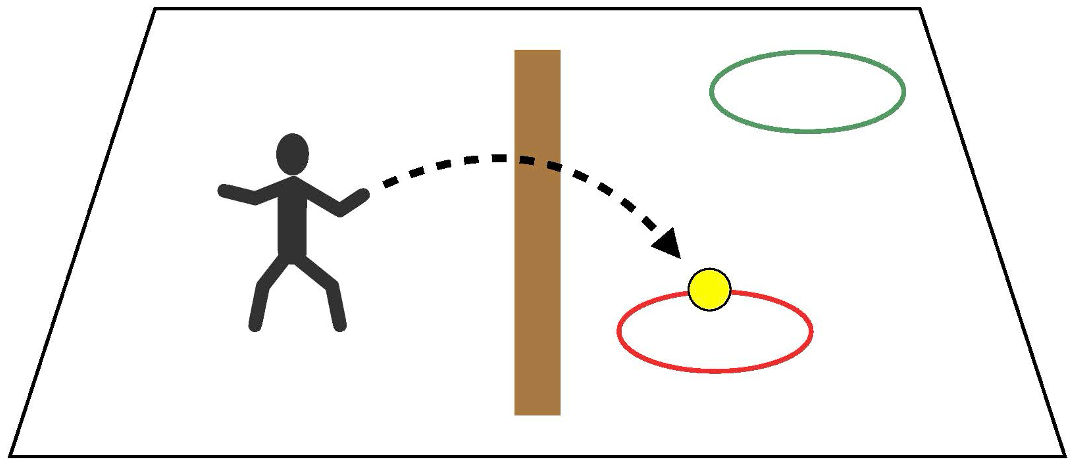
Equipment: Rackets, soft balls, hoops, makeshift nets
Put children in pairs and give each pair two hoops. The aim is for children to hit a ball into the two hoops. The hoops should be placed as per the diagram. Children should use a forehand hit and bounce the ball themselves to hit. The player not hitting is the ball collector, then swap roles.
Challenge: Children can begin to get points for getting the ball into the targets or use smaller hoops or smaller targets.
Development: Pupils can use their hands to hit the hoops instead, or pupils can throw at the targets.
3. Freeze Tennis
Equipment: Rackets, soft balls, makeshift nets
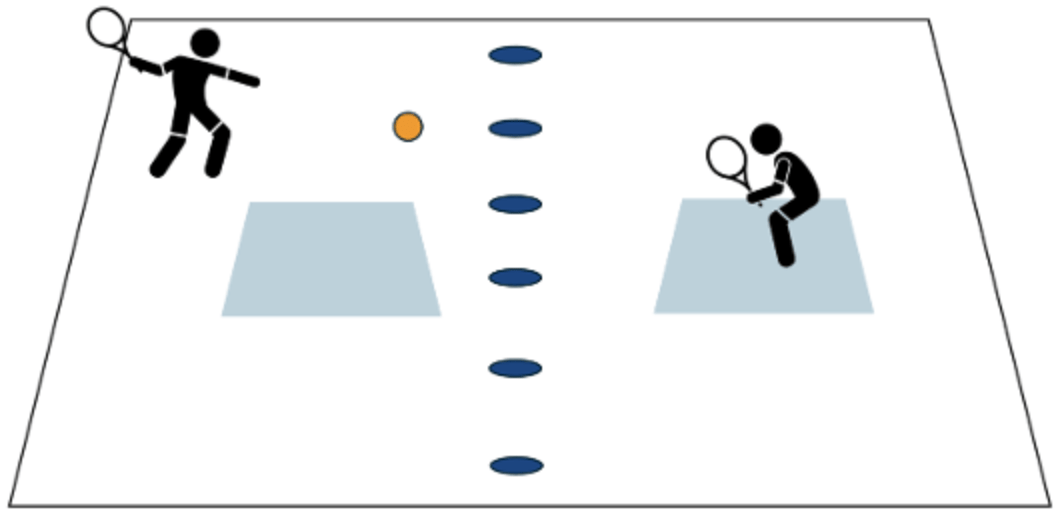
Players play one-on-one over a bench, net, or cones. The aim of the game is to keep a rally going, but each time a player hits the ball, they must freeze until their partner plays a return shot.
As soon as their partner has struck the ball, they are 'released' and can move to the incoming ball.
No matter where the ball lands on the court, players must freeze, even if they end up in the corner of their court. The ball is allowed to bounce twice (or more if needed).
Stop players to discuss what they thought about freezing after hitting shots. Were they able to have successful rallies playing this rule (probably not)? Go back into a game and change so that now, after each shot, players must make it back to a middle point on their side of the court, ready to return the next shot. See the shaded area of the diagram to illustrate the area they should always return to after playing a shot.
Question: Which version of the game was easier to keep a rally going? Why?
4. Hit the Cone
Equipment: Rackets, soft balls, cones, makeshift nets
Players work in twos, approximately 2 metres apart. Give each player a few cones, which they place in front of them. Players must try to hit their opponents’ cones—you can begin the game by throwing, then hitting with their hand and then with their racket. The other player must start by standing behind their cones and try to stop the ball from hitting their cones by catching or hitting the ball away. If one of your cones is hit, you must give that cone to your opponent.
Extension: as players get better, you can move them further apart to increase the difficulty of hitting accurately. You could add a bench or a net in between the partners, so they also have to hit over the net.
5. Wimbledon Fitness Circuit
Equipment: Cones, balls, and space markers
Set up the stations below. Divide the class into 4 equal groups, working around each station. Give the children 5 minutes at each station.
- Ball Chase: Children get into pairs. One rolls a ball, with the other chasing after, seeing if pupils can catch it before it stops.
- Serve Jump: Pupils pretend to serve and jump as high as they can.
- Baseline Sprints: Children start on the baseline. On go they must run to the “net” and back. They repeat for as many times as possible in the time.
- Fast Feet: Set up cones or SAQ ladders if available. Pupils take it in turn to get through the ladders as quickly as possible.
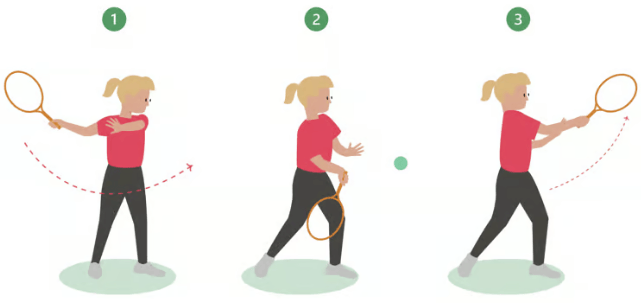
Want more free tennis resources? Check out our tennis forehand resource below.