Beginners Swimming Lesson 2
Lesson Summary
Learning Intentions
- Develop confidence lifting feet off the pool floor using support
- Explore floating in different body shapes, prone and supine
- Work cooperatively with a partner to practise and improve movements in the water
Success Criteria
- I can lift my feet off the floor and float in the water
- I can make different floating shapes using swimming aids
- I can work safely with a partner and give some feedback
We are learning...
to lift our feet off the ground and make shapes in the water.
Curriculum Links
NC Develop basic shapes in the water, showing some balance and control
L Describe what floating is
N Count how long you can hold your best floating shape for
Equipment
- Floats
- Noodles
- Arm bands
Key Questions
- Which did you feel most confident with, floating on your back or front?
- How can swimming aids help you feel more confident in the water?
- What do you need to do to keep your body relaxed while floating?
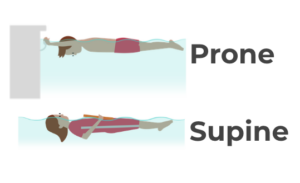
Prone and Supine positions
Teaching Points
✔︎ Assuming a prone position (on the front)
- Stretch your arms out and hold onto the wall or a float for support
- Tuck your knees gently under your body
- Let your head drop forward slightly (but it’s okay to keep it up if you’re not ready to put your face in the water)
- Push your feet back and point your toes to help you glide
NB If the swimmer is not confident yet to put their face in the water head out is fine.
Teaching Points
✔︎ Assuming a supine position (on the back)
- Hold the poolside or a float if needed
- Gently rest your head back, ears in, face above water
- Look up to keep your head in position
- Relax your neck and shoulders
- Arms out to the side or by your body
- Lift hips by raising your belly button
- Keep legs long, together, toes slightly up
Lesson Content
Starter Activity - Collect the Float
Recap:
- Remind children of poolside safety rules.
- Recap how they moved through the water last time: walking, running, bounding, bouncing, striding, sidestepping, etc.
How to play
- Put pupils into teams pairs, label A and B
- Scatter floating equipment around the pool
- On the teacher’s signal, swimmer A travels through the water using a chosen movement (e.g. striding) to collect one float and bring it back
- Swimmer B then takes their turn
- Continue taking turns until all floats are collected or time runs out
Rules:
- Only one swimmer from each team in the water at a time
- Only one float can be collected per turn
- Pupils must travel safely and avoid bumping into others
Extension: All pupils must travel using the same movement chosen by the teacher, e.g.: Hop/Bounce/Stride/Side step. Change the movement regularly to challenge balance and coordination.
Look for: Using hand actions pushing and pulling from last lesson. Moving confidently and safely through the water. Using balance and control during different travelling actions. Following the rules and taking turns correctly. Being supportive of partner.
Assessment for Learning 1 - Lifting Feet Off the Ground While Supported
How to play: Give each swimmer a safe space along the poolside
Pupils hold the wall and practise lifting:
- One foot off the floor
- Then the other foot
- Then both feet briefly
As confidence improves, encourage pupils to:
-
- Bounce gently
- Tuck knees up
- Move legs in different directions while supported
While still holding the side, pupils try:
- A front float – prone (face out of the water)
- A back float with ears in the water and face above the surface – Supine
Extensions: More confident swimmers can let go of the wall completely while using a float or noodle for support. Encourage short periods of floating in:
- Tuck shapes
- Star shapes
- Straight shapes
Look for: Pupils’ confidence when lifting their feet off the pool floor and their ability to balance and control their bodies in the water. Observe how well they relax and support themselves while floating and reacting to buoyancy. Confidence to attempt to float using a float.
Assessment for Learning 2 - Making Shapes in the Water
Set up: Put pupils into pairs and give each pair:
- 2 floats
- 1 noodle
- 1 pair of arm bands (arm bands must only ever be worn on the arms)
Encourage partners to support and observe each other throughout the activity.
How to play: Using the swimming aids, pupils practise making different floating shapes with their feet lifted off the pool floor.
Challenge pupils to create:
- Star shapes – front (prone), back (supine), and upright (vertical)
- Straight shapes – front, back, and upright
- Tuck shapes – upright and back float position (Some pupils may also attempt a front tuck shape, which may involve putting their face in the water)
- Float type: Ask the pupils to experiment with each type of floating device to perform the same shape e.g. star shape with arm bands, then two floats, then pool noodle etc.
Encourage pupils to:
- Keep their bodies relaxed
- Use controlled movement as they move in and out of the shape.
- Experiment with different supports (float, noodle, arm bands)
Partners should watch each other and give simple feedback about balance, body shape, and confidence in the water.
Extension:
- Can pupils hold a shape for longer?
- Do they feel confident attempting any shapes with less support or without aids?
Look for: Confidence lifting feet from the floor. Relaxed body positions while floating. Confidence to try different types of floats and shapes. Positive communication and support with partners. Determination to try when they do not succeed at first.