Year 3 Basketball Lesson 4
Lesson Summary
Learning Intentions
- Use a two-handed technique to perform a basketball shot
- To apply passing, dribbling and shooting skills in a game
- Assist teammates in a game to shoot
Success Criteria
- I can use both hands to shoot the ball correctly
- I can attempt a two-handed shot in a game
- I can move into space to help my team attack
We are Learning...
to perform a two-handed set shot to score.
Curriculum Links
NC Develop and apply simple attacking tactics as part of a team game.
L Ellen took her eight consecutive shot. Spell eight
N Explain the meaning of the word consecutive when used to describe a series of scores, passes, or points (e.g. “three consecutive baskets”).
Equipment
- Basketballs
- Cones
- Basketball/netball hoops
- Bibs
Key Questions
- How do we create power in the two-handed set shot?
- Why is it important that everyone in your team can shoot well?
- How did you assist your team to shoot? What could you improve next time?
Basic shot
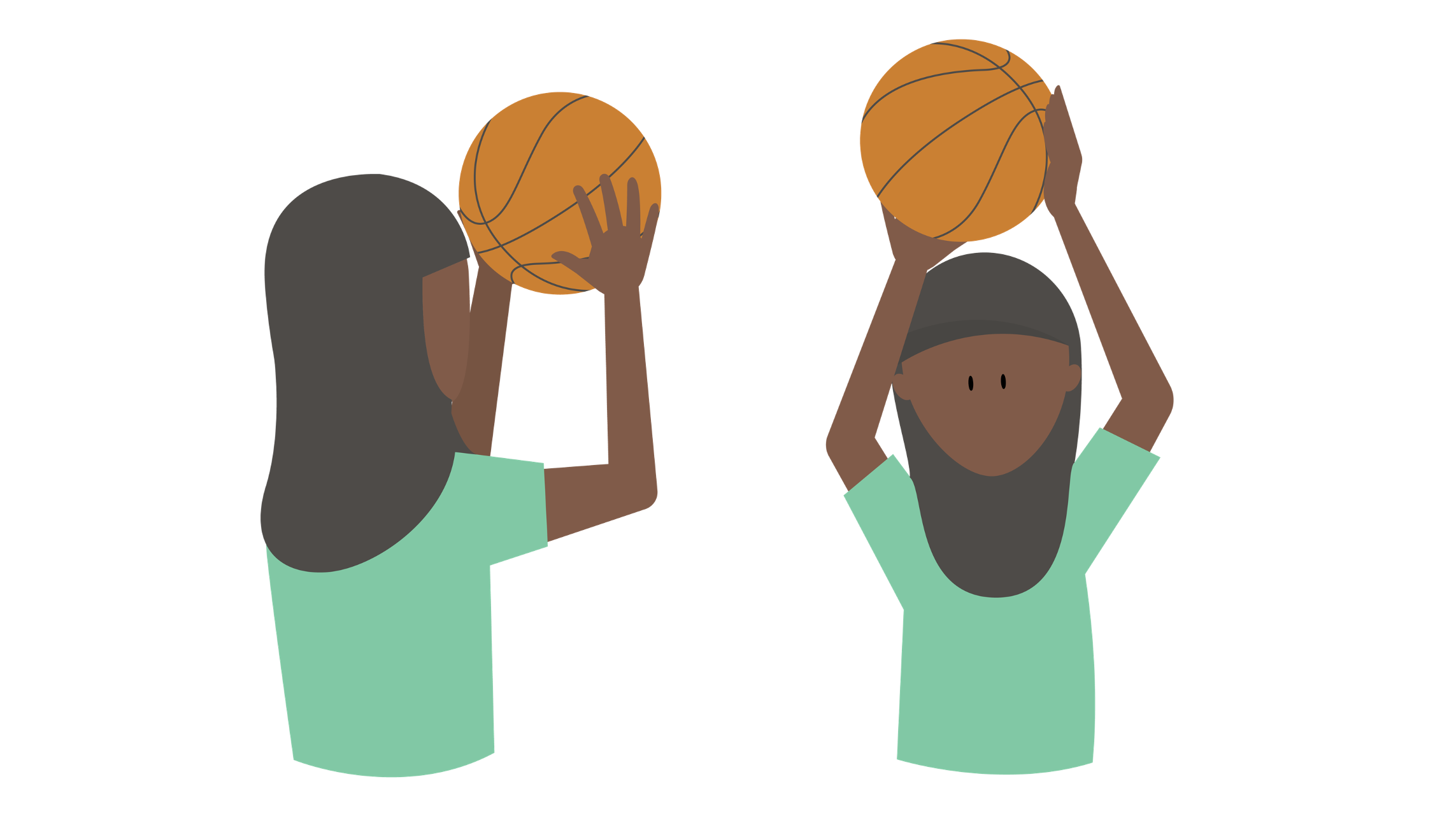
What is a set shot?
A set shot in basketball is a controlled shot taken while the player is standing still or balanced, usually using two hands to guide the ball and one hand to shoot. The aim of a set shot is accuracy and control rather than speed or power. It is most often used when:
- The player has time and space to shoot
- Taking a free throw
- Learning correct shooting technique as a beginner
Teaching Points - Two handed set shot
- Stand with feet shoulder-width apart
- Knees slightly bent to push for power
- Place shooting hand under the ball and support hand at the side
- Keep shooting arm bent at 90 degrees
- Shoulders facing the basket
- Keep eyes focused on the net
- Flick the ball off your fingertips for spin and lift
Lesson Content
Starter Activity - On the move around the world
Set-Up:
- Children should form a circle of groups of approximately 6.
- Each group will need one ball between them in the circle.
How to Play:
- Player 1 passes the ball to anyone in the circle
- After making the pass, Player 1 follows their pass and takes the spot of the person they passed to (Player 2)
- Player 2 then passes to another player and does the same, pass and follow
- Continue the pattern, keeping the ball moving around the group
- Players should try to use a chest pass (from Lesson 2)
Easier: Name the person you are going to throw to then follow the pass. Harder: Use bounce pass. Make the circle bigger to increase throwing distance.
Extension: Loop Challenge
- Pass the ball to the player next to you, then run around the outside of the circle
- While the runner moves, the rest of the group continues passing the ball
- When the runner returns to their space, the next player takes their turn
- Continue until everyone has had a go
Look for: Hands ready to catch. Stepping towards the pass. Accurate passes. Quick movement after passing. Engaged in what is going on ready to receive the ball.
Skill Development - Two-handed set shot
Warm-Up Dribble: Children move around the area, avoiding others while practising dribbling with both hands. Encourage them to explore which hand feels strongest and most controlled when bouncing the ball.
Set-Up: Split the class into groups depending on the number of hoops available. Netball posts can be used if needed, but aim for all children to experience shooting at a basketball hoop during the lesson.
Place 10 cones around each hoop to create different shooting spots. Adjust the hoop height to suit the ability of the children.
How to Play:
- Each child starts at Cone 1
- If they score a basket, they move to Cone 2 and continue around the cones
- Children continue trying to progress through all 10 shooting spots
Easier: Fewer cones. Children only need to hit the rim or backboard to move on. Move cones closer to the hoop
Harder: Score two consecutive baskets before moving on. Increase the distance of some cones.
Look for: Eyes focused on the target. Knees bent and balanced stance. Using fingertips to control the ball. Strong bend and push from legs. Gentle follow-through towards the hoop. Quick recovery of ball if shot is missed. Honesty starting back on the same cone if shot missed. Determination to keep trying. Willingness to try an easier option to achieve success.
Activity - 3 v 3 Half Court Game
Set-Up:: Play 3 v 3 on a half court using one hoop.
How to Play: The attacking team starts with the ball and works together to move towards the hoop and create a scoring opportunity.
Defenders try to stop the attack by:
- Staying low and balanced in a defensive stance
- Watching the ball closely
- Recovering quickly if an attacker gets past them
Conditioned Rule: Each attack must involve a different player attempting the shot.
For example: If Player A shoots during one attack, the next attack should aim to help Player B shoot. Encourage teamwork, communication and sharing the ball.
Rules:
- Play always starts from the start line
- If attackers score or the ball goes over the back line, teams swap roles
- If defenders deliberately make contact, attackers receive a sideline free pass
- If defenders knock the ball out, attackers restart from the sideline nearest where it went out
- If defenders intercept the ball, teams swap roles and restart from the start line
Extension: If children are confident, allow play to continue after an interception. The new attacking team must dribble or pass back to halfway before attacking the hoop.
Look for: Moving into space to support teammates. Accurate passes. Eyes up when dribbling. Defenders staying low and balanced. Communication and teamwork. Creating chances for different teammates to shoot. Using a two-handed shot.