
Managing Behaviour in Primary PE – Effective Rules & Expectations
Is Challenging Behaviour Likely in Primary PE?
Behaviour challenges in primary PE often arise because it is a high-energy, non-classroom subject where increased excitement and movement can make it harder for pupils to regulate behaviour if expectations are unclear. Research from the Education Endowment Foundation highlights that structured routines and explicit behaviour instruction are especially important in settings like PE, where pupils may struggle to follow instructions, use equipment safely, manage competition, or stay on task. Clear rules and boundaries, combined with engaging activities, help reduce these common issues, while the Association for Physical Education (AfPE) stresses that effective behaviour management should be planned proactively alongside physical learning outcomes rather than treated as an afterthought.
Encouraging Positive Behaviour & Respectful Interactions
Teaching PE Rules and Expectations Clearly
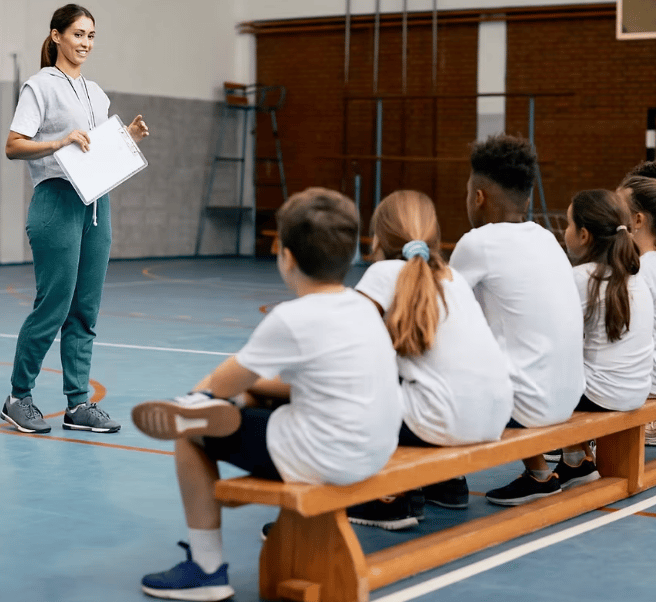
Positive PE behaviour begins with clarity, with PE rules and expectations explained using age-appropriate language that pupils can easily understand. These expectations should be demonstrated practically so children can see what appropriate PE behaviour looks like in action, rather than relying on just being told. Reinforcing PE rules at the start of lessons and at the beginning of each unit helps understanding, supports consistency, and sets a clear standard for behaviour throughout every PE session.
Promoting Respect and Inclusion
Inclusive PE lessons encourage cooperation, empathy, and respect. When pupils feel included and successful, behaviour improves. Ofsted recognises inclusive practice as a key contributor to positive attitudes and conduct. Check out our blog for more help with how to make PE more inclusive.
Using Positive Reinforcement
Recognising and rewarding positive PE behaviour is one of the most effective behaviour management strategies. Positive reinforcement is an effective approach to improving pupil behaviour in PE.
Managing Challenging Behaviour
Addressing Issues Early
Early intervention is essential when managing PE behaviour, as addressing minor issues quickly helps maintain a positive and focused learning environment. Using nonverbal signals, such as hand gestures or eye contact, allows teachers to discreetly redirect behaviour without interrupting the activity or drawing unnecessary attention to individuals. Teachers positioning themselves near pupils who may be losing focus and providing a subtle reminder of PE rules and expectations is also an effective way to address potential issues earlier. Clear stop-and-start routines further support behaviour management by ensuring pupils understand exactly when to move, listen, and respond, reducing confusion and uncertainty. Together, these strategies help prevent small behaviour issues from escalating while maintaining lesson pace and maximising learning time.
Consistent Consequences
When PE rules are broken, children should know the consequences. These should be clearly laid out and understood by children and applied consistently. Consistency builds trust and helps pupils understand expectations. The Department for Education stresses that consistent behaviour responses improve outcomes across schools.
Supporting Emotional Regulation
PE can support emotional regulation when structured effectively. Sport England highlights the role of physical activity in supporting emotional wellbeing and behaviour.
Check out our free wellbeing lessons to help children gain a greater understanding of what wellbeing is and how it helps them regulate emotions.
Establishing Consistent Guidelines
PE rules and expectations should match the whole-school behaviour policies to provide consistency across all learning environments, helping pupils understand that the same standards apply in PE as elsewhere. Involving pupils in shaping these expectations further reinforces this understanding and encourages them to take responsibility for their behaviour. To ensure these standards are maintained, PE rules should be revisited regularly, particularly at the start of lessons, with consistent reinforcement helping to embed positive habits and reduce behaviour issues over time.
Creating a Safe Environment
A safe environment underpins all positive PE behaviour, with clear rules on movement, space, and equipment that protect pupils both physically and emotionally. The AfPE Safe Practice guidance highlights the strong connection between safety and effective behaviour management in PE.
Well-structured lessons with predictable routines and smooth transitions further support positive behaviour by reducing uncertainty and behavioural risk, particularly for pupils who may struggle with self-regulation. Creating an environment where pupils feel emotionally safe and supported also encourages positive behaviour, as children are more likely to engage appropriately when they feel secure. The NHS recognises that physical activity plays a vital role in promoting children’s emotional wellbeing, reinforcing the importance of combining safety, structure, and trust in PE lessons.