
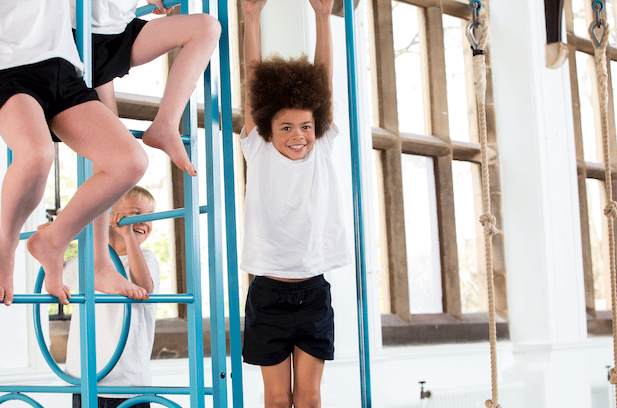
Teaching Gymnastics to Primary School-Aged Children
UPDATED 2026
Gymnastics is a key part of the physical education curriculum, especially for primary school-aged children. It plays a vital role in developing pupils’ movement skills, body control, coordination, and confidence from an early age. While many teachers may feel unsure about delivering gymnastics lessons at first, with the right structure and activities, it can quickly become one of the most enjoyable and rewarding areas of PE.
In this blog, we’ll explore why gymnastics is so valuable in primary PE and share practical ideas that can be delivered safely and effectively within a school setting.
Why Teach Gymnastics in PE?
The Primary National Curriculum for PE states that children should develop flexibility, strength, technique, control, and balance. Gymnastics naturally supports all of these areas, making it an essential component of a well-rounded PE programme.
Key benefits of including gymnastics in physical education:
· Body control & coordination - Pupils learn how to move efficiently, manage their body weight, and link movements together with increasing precision.
· Flexibility & strength - Core fitness components developed through gymnastics underpin performance in many other sports and physical activities.
· Self-control & discipline - Children must focus, practise repeatedly, and refine their movements to improve.
· Safety & risk awareness - Learning to use space, handle apparatus, and move safely helps pupils build awareness that extends beyond PE lessons.
· Creativity & expression - Gymnastics also allows children to create sequences, explore movement, and express themselves physically in a structured way.
Gymnastics Ideas for PE
If you’re looking for activities to include in your gymnastics lesson plans, here are some simple but effective ideas suitable for primary pupils:
1. Controlling Objects
Equipment: Soft balls, beanbags, gym mats
How to Play:
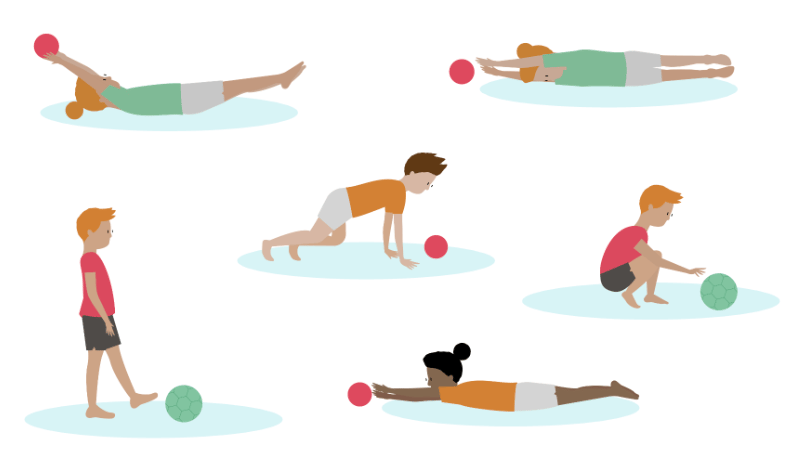
· Set pupils up in pairs on a mat.
· Each child has a beanbag and a ball.
· Ask children to explore different ways of moving and controlling the equipment.
Beanbags:
· Sit and balance the beanbag between feet or on top of the foot.
· Flick and catch it using hands.
· Balance it on the head and guide it to hands, knees, or feet.
· Explore moving it across different body parts.
Balls:
· Roll the ball in different directions using hands.
· Create shapes such as circles, squares, or figure eights.
· Progress to using other body parts like feet or knees.
2. Travelling Square
Equipment: Cones
How to Play:
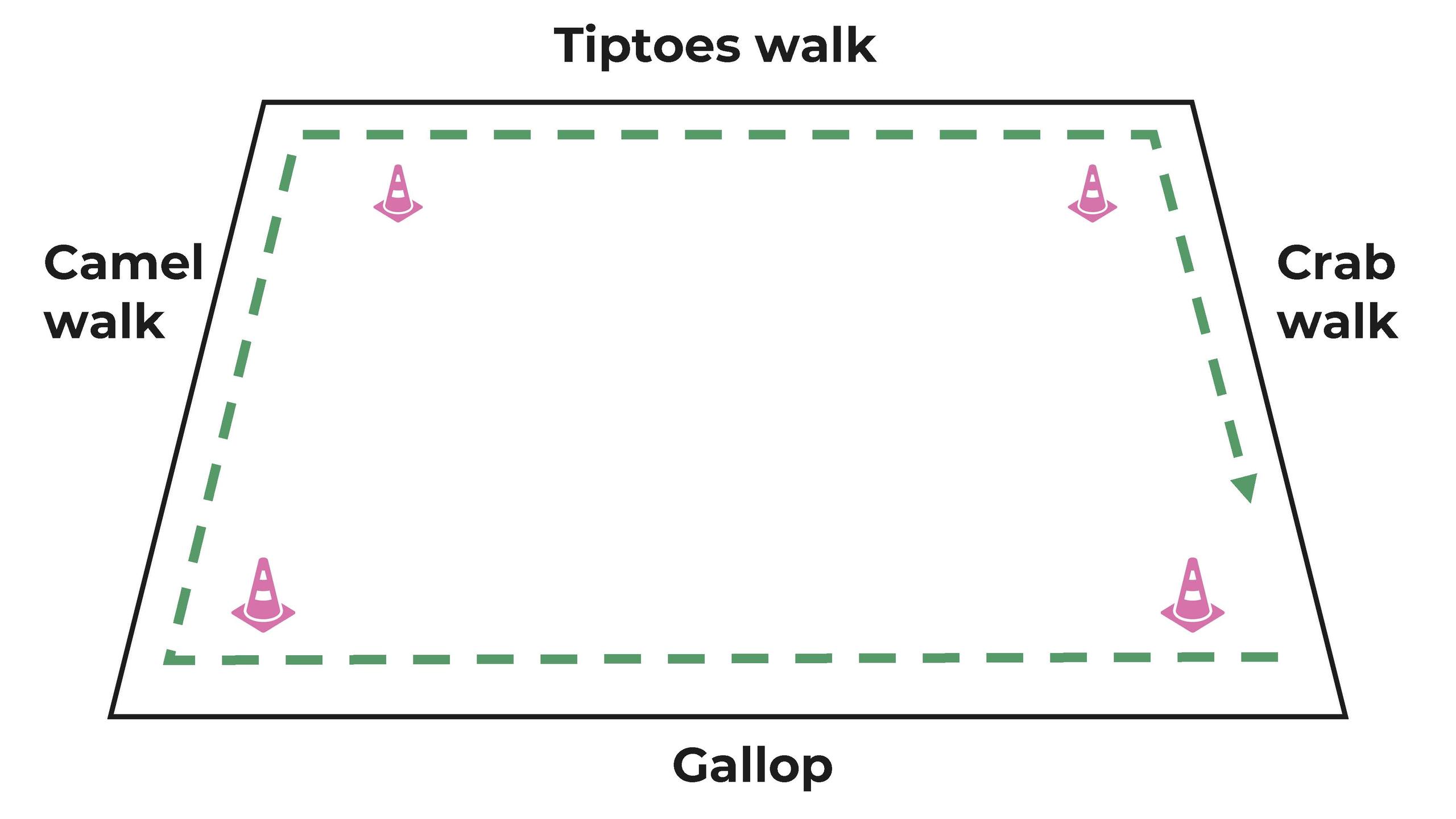
· Set up squares using cones.
· Explain that the children will move around the outside of the square and are not allowed to cut corners.
· Each side will have a specific travel action; when the children travel down that side of the hall, they must perform it.
· In our example, we have crab, tip-toe, gallop, and camel walk. However, you could choose any four travelling actions.
Extension: Change the travel action. Add in the 'reverse' command so they must all start travelling the other way.
3. Crab Tag
Equipment: None
How to Play:
· Choose two or three children to be taggers.
· Children, including the taggers, move around the floor on all fours using a crab travel action.
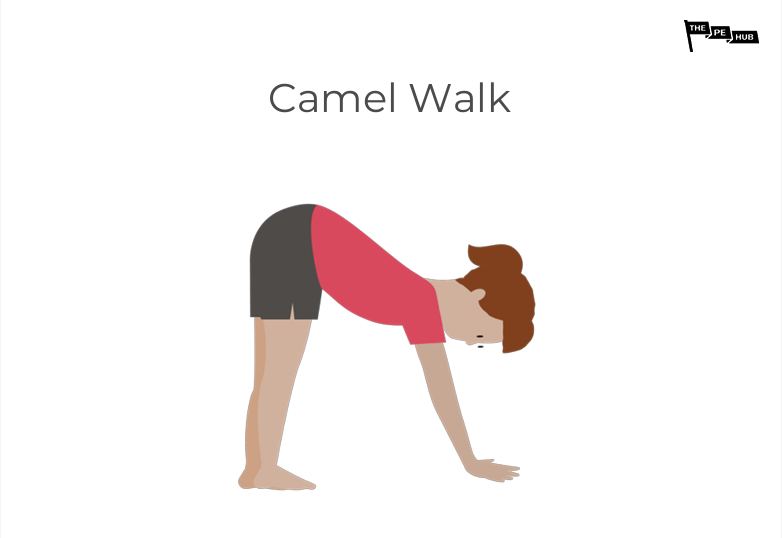
· Once tagged, children should change into a camel stand pose; they can be untagged by someone crawling under them while in the camel position.
· Change the taggers frequently.
Teaching Gymnastics with Confidence
Many teachers feel apprehensive about teaching gymnastics, particularly due to safety concerns or a lack of subject knowledge. However, confidence grows quickly when lessons are structured clearly and built progressively.
Start with simple floor-based movements before introducing the apparatus. Ensure pupils understand basic shapes (such as tuck, pike, and star) and transitions between them. Clear demonstrations, consistent routines, and strong behaviour expectations are key to maintaining a safe environment.
It’s also helpful to use scaffolding techniques, breaking skills into smaller steps, so that all pupils can experience success regardless of ability. Differentiation can be achieved by varying complexity, speed, or balance challenges.
Risk assessments and safe equipment use are essential. For further safety guidance, check out the AfPE Safe Practice in PE document.
Using a mix of individual, paired, and group work helps build confidence and social skills. Over time, pupils can begin to sequence movements independently, encouraging creativity and ownership of their learning.
Gymnastics, when taught with care and enthusiasm, can become a highlight of the PE curriculum, helping children build not only physical skills but also confidence, resilience, and a lifelong enjoyment of movement. For more help with teaching gymnastics, check out our Gymnastics Activity Area, which includes free lesson plans and resources.